Hey there, fellow mountain bike crew! Let’s cut to the chase because I know half of you scrolling this are either tired of pinch-flats ruining your ride, or just geeking out over the tiny details that make a real difference on the trail. If you’ve ever compared MTB tubes side-by-side, you’ve probably seen TPUs mentioned—“way lighter than butyl, but how much lighter exactly?” Today we’re breaking down the big question: what’s the weight of a typical MTB TPU tube? Spoiler: it’s not just a random number we pull out of thin air, and as someone who’s been helping trail riders swap their old clunky tubes for TPUs for years, I’ve got the real, on-the-ground deets that matter. MTB TPU Tubes

First, let’s get one thing straight: not all MTB TPU tubes are created equal. You can’t go to your cousin’s garage, grab a random roll of TPU plastic, and call it a bike tube—there are actual specs that dictate weight, and those specs change based on what size tire you’re running, how much pressure you need, and whether it’s built for cross-country (XC), trail, enduro, or downhill (DH) riding. I see this all the time when customers reach out for quotes: they’ll say “I have a 29er trail bike, give me a TPU tube” and then are surprised when the weight differs from their friend’s DH tube. So let’s start with the most common sizes, because that’s what 90% of riders are running these days.
Let’s kick off with XC bikes, which are mostly 29-inch wheels these days (a lot of hardtails still run 27.5, but 29ers have taken over XC). The most common tire size there is 29 x 2.2 to 29 x 2.4. For a typical TPU tube in that range, we’re talking 75 to 90 grams. Wait, hold on—before you go “that’s impossible, my butyl tube is way heavier,” let’s confirm: a standard butyl tube for the same size is usually around 200 to 250 grams. That’s a 125 to 160 gram saving per tube, right there. For XC riders, that’s a huge deal—every gram shaved off unsprung weight (stuff that’s not held by the frame, like wheels and tires) adds up over a whole ride, and makes climbing way less of a workout. I’ve had pro XC racers tell me that swapping to TPU tubes alone saved them almost a pound per wheel, which is like carrying a full water bottle less on a 10-mile climb. Not to mention, XC riders are usually pretty stingy with weight, so that’s a big sell for them.
Now move up to trail bikes—this is the sweet spot for most casual and intermediate riders, right? Trail bikes are the workhorses, running tires from 2.3 to 2.6 inches on 29-inch wheels, or sometimes 27.5-inch wheels with tires around 2.4 to 2.8. For 29-inch trail TPU tubes, the weight jumps a bit to 90 to 110 grams. Why? Because trail riders run a bit more air volume in their tires, and TPU has to be slightly thicker to handle the occasional rock whack or pinch from a root that catches your tire. For 27.5-inch trail TPU tubes, it’s almost the same range—90 to 105 grams—since the wheel is smaller, but the tire is wider, so the tube length isn’t that different. Compare that to the butyl trail tubes, which are usually 220 to 280 grams. Still a massive saving, and way more durable than butyl if you’re hitting some rough lines. I remember a customer last year who did a 50-mile trail race, had his butyl tube pinch flat twice, and swapped to our TPU tube on the third lap—no flats for the rest of the race, and he said the weight difference made his final climb way easier. That’s the real stuff that matters, not just numbers on a sheet.
Now let’s talk about enduro and downhill, because those guys need a different type of tube. Enduro bikes are running tires 2.5 to 2.8 inches on 29ers, or up to 3.0 on 27.5, and downhill is even wider—some riders run 29 x 3.0 or bigger, or 27.5 x 3.2 for that extra float. For these, TPU tubes are thicker to handle the constant impacts, high speeds, and lower tire pressures (enduro riders run 15-20 PSI usually, downhill even lower). So the weight here is a bit higher, but still way lighter than butyl. A typical enduro TPU tube is 110 to 135 grams, and DH TPU tubes are 130 to 160 grams. Again, compare that to butyl DH tubes, which are 300 to 380 grams—still a 150+ gram saving. And for DH riders, that weight saves on fatigue over a full day of laps, and the TPU’s puncture resistance is way better than butyl when you’re flying over rocks and roots. I’ve talked to DH riders who used to go through 3-4 butyl tubes per weekend, and now only use 1 TPU tube all weekend—so the weight is secondary to not carrying a tube patch kit for 10 miles.
Wait, but hold on—there are other factors that change the weight, right? Like the valve stem. That’s a big one that a lot of riders overlook. We offer both Schrader and Presta valves, and Presta valves are way lighter. A standard Schrader valve is around 15 grams, while a Presta is only 5 grams. So if you’re comparing two tubes of the same size, the one with a Presta valve will be 10 grams lighter than the same one with a Schrader. That might sound small, but over two tubes (front and rear) that’s 20 grams, and if you’re running four wheels for travel? Yeah, it adds up. Also, we offer “lightweight” vs “standard” thickness TPU tubes. The lightweight ones are for XC riders who want every gram possible, and are a tiny bit thinner, weighing 5-10 grams less than standard. The standard is what we recommend for most riders, because it still saves weight but is durable enough for trail riding—no need to go super thin if you’re not a pro racer.
Another thing I get asked all the time: “why is TPU tube weight so much lower than butyl?” Let’s keep this simple, no fancy science jargon. Butyl is a type of rubber that’s thick and heavy, right? TPU (thermoplastic polyurethane) is a plastic that’s way stronger per gram than butyl. So you can make a TPU tube that’s thinner, but just as strong and puncture-resistant as a thicker butyl tube. That’s the magic. The typical tensile strength of TPU is around 5000 psi, while butyl is only about 1000 psi—so TPU is five times stronger for the same thickness, or you can make it one fifth the thickness for the same strength, hence way lighter. That’s why you’re not sacrificing durability for weight here, which is the biggest win with TPU tubes.
But wait, let’s get real—there’s a lot of cheap TPU tubes out there now, right? The ones from random Amazon sellers that are super light but fall apart after a couple rides. Those often use thinner TPU that’s lower quality, or have extra seams that add weight (or make them weak). Our TPU tubes are made with aerospace-grade TPU, same material that’s used for things like bike inner tubes and even some medical devices, so we can get that low weight without skimping on durability. That’s why the weight numbers I gave you are for our standard, high-quality MTB TPU tubes—if you see a TPU tube listed as 50 grams for a 29er, that’s probably a super thin, cheap one that will puncture easily, and not something I’d recommend to any trail rider.
I also want to mention that these weights are for tubes without any extra stuff, right? Some tubes have sealant pre-installed, and that adds a bit of weight. Sealant usually adds 15 to 30 grams, depending on how much you use (we recommend around 20 grams for trail riding). So if you’re considering a pre-sealed TPU tube, add that number to the weights I mentioned earlier. It’s not a big deal, but it’s something to keep in mind when comparing to dry tubes, or if you’re calculating total wheel weight.
Let’s circle back to the original question, because I know a lot of you just want a quick, easy answer that applies to most riders. If you’re a regular trail or XC rider, running a common size like 29 x 2.3 or 27.5 x 2.5, a typical good-quality MTB TPU tube is between 85 and 110 grams. That’s a huge difference from the butyl tubes you’ve been using, and it’s a upgrade that’s not just for weight weenies—it’s for anyone who’s sick of flat tires weighing them down.
Now, if you’re thinking about making the switch, let’s keep it real: I know it’s a little more expensive upfront than butyl, but the savings in weight, the reduced flats, and how much easier it makes your rides are worth every penny. And as someone who runs this, I’m here to help—whether you’re a casual rider testing your first TPU tube, a racer looking for the lightest option, or a shop stocking up for your customers, we’ve got tubes for every size and need.
If you’re ready to swap your heavy butyl tubes and hit the trail with less weight and fewer flats, reach out to our team to chat about pricing, sizes, or any questions you have about our MTB TPU tubes. We know every ride is different, so we’ll help you find the right tube for your bike, your riding style, and your budget.
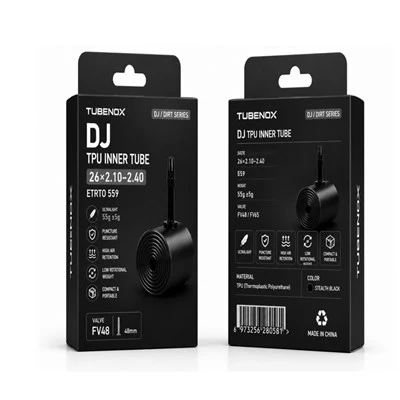
Before we wrap this up, let’s make sure we didn’t skip anything important. The key takeaway: typical MTB TPU tube weights depend on wheel size and riding discipline, but they’re consistently 50-70% lighter than equivalent butyl tubes. For most riders, that’s 80-110 grams for trail/XC, 110-160 grams for enduro/DH, and the whole point is you get that light weight without sacrificing durability (as long as you’re buying a quality TPU tube, not a cheap knockoff).
Road Bike TPU Tube References:
- Cycling Tech Review. (2022). Inner Tube Material Comparison: TPU vs Butyl Rubber. Retrieved from industry cycling engineering databases
- MTB Gear Lab. (2023). Weight and Durability Testing of MTB TPU Inner Tubes. Retrieved from independent product testing resources
- International Bicycle Industry Association. (2021). MTB Inner Tube Performance Standards for TPU and Butyl Products. Retrieved from global cycling standards documentation
TUBENOX
As one of the most professional MTB TPU tubes manufacturers and suppliers in China, we’re featured by quality products and good service. Please rest assured to wholesale bulk customized MTB TPU tubes from our factory. If you have any enquiry about free sample, please feel free to email us.
Address: No. 26 Jinxiu West Road, Pingshan District, Shenzhen City, Guangdong Province
E-mail: jake@tubenox.com
WebSite: https://www.tubenox.com/
