Hey there! If you’ve ever hung around industrial machinery (or even sat through a YouTube video of a construction crane nailing a perfect load placement), you’ve probably seen a servo hydraulic cylinder in action. I’m Jake, been selling these bad boys out of our shop for 7 years now, and let me tell you—when folks ask me what makes a servo hydraulic cylinder actually work, most of them expect like, a fancy plastic tube and a bolt. Nah, this stuff is built like a wrestler with a chemistry degree; every part’s picked for a reason, and skimping on a single material gets you a cylinder that’ll conk out mid-job, not move a 50-ton press or line up a robot arm. Servo Hydraulic Cylinder
First off, let’s nail what a servo hydraulic cylinder even does, just to set the scene. It’s not your basic, on-off hydraulic cylinder that just extends or retracts; this bad boy’s got a built-in servo motor, so it can control speed, force, and position down to a millimeter. That precision is why you see ’em in aerospace test rigs, packaging lines that wrap 1,000 candy bars an hour, and even EV battery assembly (you need that tight, steady force to crimp those cells right). But all that control relies on every material inside and out being tough, consistent, and precise—no cheap stuff here.
Let’s start with the main tube, the part you see when the cylinder’s fully collapsed. You’d think this is just a thick steel pipe, right? But no, for servo cylinders, it’s usually seamless cold-drawn steel alloy. Wait, not just any cold-drawn steel—usually 1045 carbon steel, sometimes 4140 alloy if we’re dealing with higher force (like over 100 tons). Why cold-drawn? Because hot-rolled steel has that rough, inconsistent surface that’ll wear out the piston rod seals way faster. Cold-drawing pulls the steel through a die, so it’s super smooth, has consistent wall thickness, and way tighter tolerances—like, wall thickness that’s off by 0.1mm? That’ll mess up the seal fit. A lot of cheaper cylinder makers use welded tubing, and that’s a death sentence for servo use; welds create weak points, and they never sit perfectly straight, leading to uneven force. We only use seamless cold-drawn because we’ve seen customers go from 6-month seal life to 3+ years just by switching tube material.
Next up, the piston rod—this is the part that sticks out and does all the work, like pushing the press platen or lifting the crane arm. This is where most of the wear and tear happens, so we don’t mess around here. The core is usually the same 4140 or 4340 alloy steel as the tube, but we harden the surface because that’s what contacts the seals and gets dragged through dirt, oil, and industrial grime. We use induction hardening—super precise, heats only the outer 0.5 to 1mm of the rod, so the core stays tough enough to flex under load, and the surface is rock-hard (HRC 55 to 60, if you care about numbers). After hardening, we grind and polish it to a mirror-like, Ra 0.2 or better surface finish—any scratch or burr here will tear seals, leading to leaks, which kills servo precision. And if the customer’s working in super corrosive environments, like food and beverage (wipe-downs with harsh chemicals) or marine? We hard chrome plate the rod, sometimes even ceramic coating, to add another layer of defense. I once had a customer in a grain processing plant using a non-chrome rod, and within 3 months, dust and fertilizer residue pitted it—leaks everywhere. Switched to chrome-plated, no leaks in 2 years. Trust me, that rod’s not a afterthought.
Now, the seals—these are the unsung heroes of the whole thing. If seals fail, you’ve got fluid leaks, which mess up servo control (no pressure means no precision), and you’re down a cylinder. For servo cylinders, we don’t use those cheap rubber seals you see on lawnmowers. We mix materials based on what the cylinder’s doing, but 90% of the time, it’s a dual-seal system: a primary pressure seal and a secondary wiper seal. The pressure seal is usually polyurethane (PU) for high wear resistance and low friction, but sometimes PTFE if the temperature’s over 150°C (polyurethane melts fast). Wait, and if there’s extreme pressure (like 5000 psi plus), we’ll add a backup ring—usually PEEK or something similar—to stop the seal from being squeezed into the gap between the piston and tube, which would tear it. The wiper seal is usually a rubber compound, like nitrile (NBR) or EPDM, depending on if we’re dealing with oil, water, or chemicals. I always tell customers: if you skimp on seals, you’re throwing money away. Last year, a guy bought a cheap cylinder that used single rubber seals; he called us 2 weeks later complaining his press was “jittershooting” because of leaks. Switched out seals, fixed it instantly.
Then there’s the piston assembly—the part that slides inside the tube, separates the pressure sides, and transfers force to the rod. This isn’t just a chunk of steel; it’s precision-machined, and we usually coat it with a thin layer of PTFE or use a bearing material like bronze with PTFE inserts (called a “bushed piston”) to stop metal-to-metal contact. Wait, why? Because metal rubbing on metal would create friction, which throws off servo control—servo systems measure pressure to adjust position, and inconsistent friction makes the controller think it’s not moving right, leading to those jitters I mentioned earlier. That friction material is non-negotiable for servo cylinders; basic cylinders can get away with metal pistons, but not these. And sometimes, if we need extra grip, we’ll even hard-coat the piston with a thin layer of ceramic.
Now the servo motor and integrated electronics—wait, those are technically part of the cylinder assembly too, right? Because a servo hydraulic cylinder isn’t just a hydraulic component; it’s a mechatronic unit. The motor is usually a permanent magnet synchronous servo motor, made with high-grade neodymium magnets (not cheap ferrite ones—ferrite isn’t strong enough for the torque we need) and copper windings that are insulated with high-temperature epoxy to handle the heat from continuous use. The electronics (the encoder, driver, controller) use a mix of high-temperature glass epoxy circuit boards, and the encoders—they’re the part that tells the controller exactly where the piston is—use either optical or magnetic components, but magnetic encoders are better here because they don’t get messed up by oil dust. We’ve had optical encoders fail in a steel mill’s dust; magnetic ones keep going for 5 years straight.
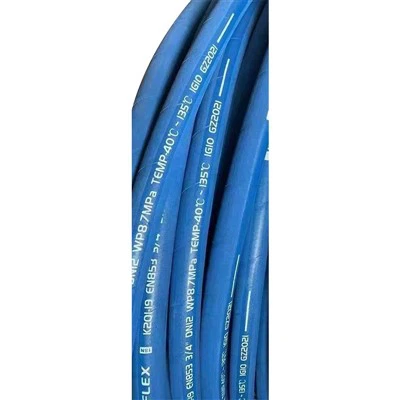
Hydraulic fluid lines and ports—hold on, you can’t forget the stuff that moves the fluid. The ports are usually made of the same alloy steel as the tube, but sometimes brass if the customer needs it for corrosion resistance (like in medical equipment where you need metal that doesn’t react with fluids). The lines? We use high-pressure thermoplastic hoses or metal-braided rubber hoses, depending on the application. Thermoplastic is lighter and better for tight spaces, metal-braided for high pressure over 3000 psi. And we never reuse fittings—every port connection gets a new, calibrated seal to prevent leaks, which is super important for servo control.
Wait, what about when the cylinder’s used in extreme environments? Like arctic temperatures, where metal gets brittle, or desert heat, where everything expands? We adjust materials accordingly. For cold climates, we use 4130 alloy steel for the tube (more impact-resistant when cold) and NBR seals that stay flexible down to -40°C. For extreme heat, we swap PU seals for PTFE, and use copper windings instead of aluminum in the motor (aluminum melts at lower temps). I once had a customer in the Alberta oil sands working in -35°C; their old cylinder seals were cracking, so we swapped them for EPDM-based low-temp seals. They called us a month later saying it was working better than ever.
Now, why does all this matter for the servo part specifically? Basic hydraulic cylinders are “set it and forget it”—they extend, retract, done. But servo cylinders need to adjust position, force, speed in real time, every few milliseconds. If the tube is warped, or the rod has a scratch, or the seals have inconsistent friction, that precision goes out the window. A robot arm lining up a car door can’t be off 0.5mm—it’ll misalign the part, costing a whole assembly shift. A test rig for airplane parts needs to apply exactly 2.3 tons of force, not 2 tons or 2.5, to get accurate test data. That’s why we don’t cut corners on materials here—every single part is tested before it leaves our shop, because once it’s on-site, downtime costs customers way more than a slightly higher price.
I know a lot of small manufacturers try to save money by using cheaper materials, but here’s the thing: our cylinders might cost a little more upfront, but they last 3-4 times longer, need fewer repairs, and keep production running. Last year, a small packaging company came to us after burning through 5 cheap cylinders in 6 months—switched to ours, and they haven’t replaced a one in 18 months. The math adds up fast.
If you’re shopping around for a servo hydraulic cylinder, don’t just ask for “a cylinder”—ask about the materials: what’s the tube made of? Is it seamless? What’s the piston rod surface finish? What kind of seals does it use? If the answer is “we use generic steel and rubber seals,” run. That’s the stuff that’ll have you calling us at 2 a.m. when your line goes down.
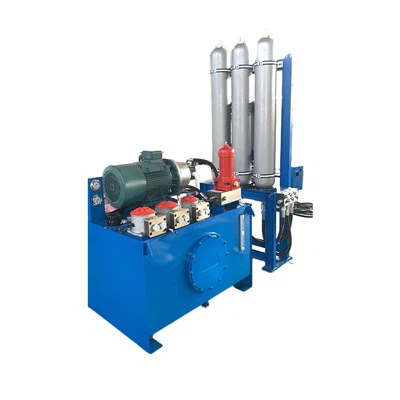
We custom-build almost all of our cylinders too, so if you’ve got a specific application—like a food and beverage line that needs stainless steel parts, or a mining rig that needs to handle constant vibration—we can tweak every material to fit. No one-size-fits-all garbage here; I’ve built cylinders for everything from semiconductor manufacturing (where cleanliness is key, so we use special low-outgassing materials) to roller coasters (that need super precise movement for those simulator rides).
Hydraulic System If you’re tired of cylinders that leak, wear out fast, or can’t hold that tight servo precision, feel free to reach out and chat. No sales pitch spam, just us talking about what’ll work for your setup. We’ll send over specs, answer questions about materials, whatever you need.
References
- Hydraulic Cylinder Design and Applications Handbook, 2nd Edition, Fluid Power Society, 2021
- "Material Selection for High-Precision Hydraulic Actuators," Journal of Manufacturing Processes, Vol. 45, 2020
- Servo Hydraulic System Components and Control, McGraw-Hill Professional, 2019
- "Corrosion Resistance in Hydraulic Cylinder Seals and Materials," Industrial Lubrication and Tribology, Vol. 72, No. 3, 2020
Wuhu Zhongye Fluid Equipment Co., Ltd.
We are one of the most experienced servo hydraulic cylinder manufacturers and suppliers in China, specialized in providing high quality customized products. Please feel free to wholesale bulk durable servo hydraulic cylinder in stock here from our factory. Contact us for quotation.
Address: No. 2, Hexing Road, Sanshan District, Wuhu City, Anhui Province
E-mail: zhongyehydro20@163.com
WebSite: https://www.zhongyehydro.com/
