If you’ve ever stood in a production meeting with our team—clutching a half-formed batch of tablets that passed every weight check, disintegration test, and impurity screen, yet still felt “off” under gentle pressure—you know that quality for finished dosage forms (FDF) isn’t just about checking boxes. For 12 years, our team has supplied FDF to specialty pharma and generic brands across North America, and the single most common question we get from our quality partners is: “Why does hardness matter, and how do we test it right?” Finished Dosage Form
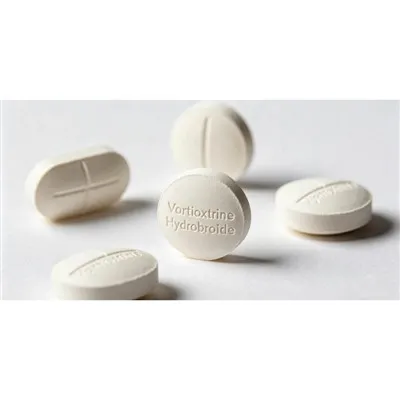
Tablet hardness isn’t a arbitrary metric. It’s the balance between a tablet that crumbles before it even hits the tongue on one end, and one so rock-solid it won’t disintegrate in the GI tract on the other. For our clients, that line is non-negotiable: a 10mg pain reliever for a hospital can’t be too weak to package, and a time-release hormone tablet for a chronic condition can’t stay intact so long it never releases its dose. Over the years, we’ve tested hundreds of batches, worked through every common method, and learned firsthand that picking the right hardness test depends on your tablet’s design, its intended use, and even the equipment in your lab. This post breaks down the most reliable, industry-standard methods—what they measure, their pros and cons, and why we swear by specific ones for different FDF types.
Let’s start with the gold standard that’s been the backbone of tablet testing since the 1950s: the Monsanto Hardness Tester. It’s simple in design: you place a tablet between two anvils, crank a screw that pushes a piston against one anvil, and a calibrated scale shows the force needed to split the tablet into two halves. The unit of measurement here is kilogram-force (kgf) or Newtons (N)—1 kgf equals ~9.81 N, a conversion worth remembering for cross-lab consistency.
This method works because it directly measures the tensile strength required to fracture a tablet along its horizontal diameter, which is where the vast majority of manufacturing and shipping stress hits. For example, we use Monsanto testing for immediate-release (IR) tablets that get packaged in blister packs or plastic bottles—those get jostled in trucks, stacked on shelves, and the Monsanto’s steady, controlled force mirrors that real-world impact. But it’s not perfect. Monsanto testers work best for flat, round tablets; if you have an oblong capsule-shaped tablet or a scored tablet meant to be split in half, the force can be unevenly distributed, leading to false high or low readings. We once had a client send us scored tablets to bulk supply that failed Monsanto hardness on one side, even though the score line was properly formed—turns out the anvil pressure was compressing only the scored half, not the whole tablet. We switched to the next method for that batch, and the results aligned perfectly with in-vitro disintegration tests.
That next method is the Schleuniger Hardness Tester, often called the “digital Monsanto” for modern production lines. Where the Monsanto relies on manual cranking and a needle-based scale, the Schleuniger uses a digital load cell that delivers consistent, reproducible force, and many models automatically record readings for 100+ tablets per minute—critical for high-throughput manufacturing like our 500,000-tablet daily production run. What makes it stand out for our work is its ability to test non-round and scored tablets evenly: the anvils are adjustable, so they conform to the tablet’s shape, eliminating that uneven pressure we saw with the Monsanto. For delayed-release (DR) or extended-release (ER) tablets, which have a thick, brittle coating that can crack during handling, the Schleuniger’s precision means we catch microcracks in the coating before they leave our facility. We’ve had batches that passed Monsanto hardness at 8 kgf but failed Schleuniger because the digital sensor picked up a 0.5 mm crack in the coating that would have broken down prematurely in the GI tract. The only downside? Schleuniger units are a bigger upfront investment than manual Monsanto testers, so we keep one manual tester for small, custom batches and reserve the digital models for full commercial runs.
Now, if you’re testing tablets that aren’t perfect cylinders or rounds—think ovals, tablets with a beveled edge, or even oblong suppositories? Wait, no, suppositories aren’t tablets—think chewable tablets, for example, which are shaped for kids and have a softer, more crumbly core—you might reach for the diametral compression test, though often it’s folded into the Schleuniger or Monsanto settings for non-standard shapes. Wait, no, there’s another method called the fracturability test, but wait—actually, for very small tablets, like sublingual tablets that are 2mm in diameter, the two standard testers are too big. That’s where the 2-point point-load test comes in, also called the Schirmer test, though that name is mostly used for small dosage forms.
The point-load test works by placing a small tablet between two sharp points (usually made of stainless steel) that apply force only at two spots along the tablet’s curve, rather than full surface contact. For sublingual tablets, which dissolve in 30 seconds or less, hardness can’t be measured the same way as an IR tablet: too high a force during testing would crush the delicate, porous structure that makes them dissolve fast. We use the point-load test for our sublingual allergy tablets that go to pediatric clinics—their target hardness is 2–3 N, and the point-load test avoids over-compressing the porous core, giving us consistent readings that correlate with in-vitro dissolution. The downside here is that the test is more prone to operator error: if the points aren’t perfectly aligned, you’ll get readings that are 15–20% off. So we train every associate on our quality team to calibrate the point-load anvils daily, and we run 20 control tablets per batch to cross-verify results with a digital microscope.
Wait, let’s not forget about a less common but critical method for coated tablets: the coating hardness test, which uses a micro-indentation tester. Coated tablets are supposed to have a hard, smooth exterior that protects the core during shipping, but the coating itself can be too brittle and crack before use, or too soft and smudge during packaging. We use micro-indentation for our film-coated antidepressant tablets, which need a hard enough coating to resist smudging but soft enough that the tablet stays flexible enough to split for patients who need half a dose. The micro-indentation tester uses a tiny diamond probe that presses 10–100 micrometers into the coating surface, measuring the force required to make a small indent. This is the only test that lets us isolate coating hardness from core hardness, which is a game-changer for tablets that have two separate layers—like our ER tablets where the outer layer is the immediate-release dose and the inner layer is extended-release. The Monsanto and Schleuniger tests measure the whole tablet’s hardness, so they can’t tell if the coating is failing, but micro-indentation can pick up a coating that’s too brittle even if the whole tablet passes standard hardness.
Now, for all these methods, there’s a common pitfall we’ve learned to avoid: the difference between breaking force and actual tablet hardness. Breaking force is the amount of force needed to split the tablet, but hardness is a relative measure of how the tablet handles stress—same as how a glass and a plastic bottle might break at the same force, but the plastic is “harder” under gentle pressure. That’s why we never rely on a single test; we always cross-verify. A few years ago, we had a client send us a batch of ER diabetes tablets that passed Schleuniger hardness at 12 N, but failed our point-load test because the core was too dense and not porous enough to dissolve. We switched the excipient blend slightly (reducing microcrystalline cellulose by 5% and adding crospovidone) and re-tested, and the hardness stayed consistent while dissolution hit the required 90% in 2 hours. That’s the kind of quality control that matters for FDF: testing methods work best when you use them in combination, not in silos.
Another mistake we see new FDF suppliers make is ignoring storage conditions during testing. If you test a tablet at 20°C and 40% humidity, then ship it to a climate where humidity is 70% and temperature is 30°C, its hardness will drop by up to 25% in a week—because moisture softens the binder in the tablet. We test all our batches at 25°C and 60% relative humidity, which mimics the storage conditions our clients specify, and we run accelerated stability tests by keeping tablets at 40°C and 75% humidity for 4 weeks, then re-testing hardness to make sure it doesn’t drop below the required threshold. That’s why our clients can trust that a tablet that passes our hardness test today will still pass at their pharmacy shelf, 6 months from now.
If you’re an FDF developer or pharma brand, choosing the right hardness method isn’t just about checking a USP or EP (United States Pharmacopeia/European Pharmacopoeia) box—it’s about matching the test to your tablet’s purpose, shape, and intended use. A manual Monsanto works for small batches of round IR tablets, a digital Schleuniger for high-volume non-standard shapes, a point-load test for small porous sublingual tablets, and a micro-indentation test for coating-specific performance. And always cross-verify with at least two methods, because no single test captures all the factors that make a tablet strong enough to survive production, packaging, shipping, and use.
At our FDF supply team, quality isn’t a process we run once before a batch ships—it’s baked into every step, including how we test hardness. If you’re working on a new FDF, or you’ve had trouble with batch consistency, dissolution, or tablet performance that hardness testing could solve, we’re here to help. We’ve tested everything from chewable antacids to time-release hormone tablets, and our quality team can walk you through which method will work best for your product, no matter its shape or use case. Reach out to discuss your next project, and let’s build tablets that work as well as they’re designed.
Cardiovascular Agents References
- United States Pharmacopeia. General Chapter <1216> Physical Testing of Dosage Forms. Rockville, MD: USP; 2020.
- Food and Drug Administration. Guidance for Industry: Tablet Hardness and Friability Testing. Silver Spring, MD: FDA; 2018.
- Schleuniger, Inc. Operator’s Manual: Model 6D Digital Hardness Tester. Basel, Switzerland; 2019.
- Monsanto Company. Tablet Hardness Measurement: Historical and Practical Applications. St. Louis, MO; 1972.
HK Neopharm Limited
HK Neopharm Limited is one of the most professional finished dosage form manufacturers and suppliers in China, also supports customized service. Welcome to buy high quality finished dosage form in stock here and get quotation from our factory. For price consultation, contact us.
Address: Room W Unit 6086/f Metro Loft 38kwai Hei St Kwai Chung, Hong Kong
E-mail: sales@hkneopharm.com
WebSite: https://www.hkneopharm.com/
