Hey everyone, let’s cut right to the chase because I get this question all the time from our clients—both DIY folks working on old vinyl flooring and pros restoring vintage vinyl siding: Can abrasive pads be used for sanding vinyl? Spoiler alert: The answer isn’t a straightforward “yes” or “no,” and as an abrasive pads supplier, I’m not here to give you cookie-cutter advice. I’m here to break this down like we’re chatting over a coffee (or a iced latte, no judgment) because too many people skip the nuance here and end up ruining their vinyl (or worse, mess up their abrasive pad investment). Abrasive Pads
First, let’s get one thing straight: Vinyl is a weird material. It’s a plasticized polymer, right? That means it’s softer than wood but way more flexible, and it melts at a lower temperature than most other surfaces we sand. If you grab a random heavy-duty aluminum oxide pad you’d use for stripping paint off a deck and start scrubbing at vinyl, you’re gonna have a bad time. Why? Because those coarse, rigid grains generate way too much heat and force—they’ll burn the vinyl, leave deep gouges, and even melt it a little in spots, creating a sticky mess that’s impossible to buff out. That’s the “don’t do this” part, but there’s a right way to do this too, when you pick the right abrasive pad for the job.
Let’s start with the basics: What do people actually need sanding vinyl for? Nine times out of ten, it’s one of three jobs: Refinishing old sheet vinyl that’s gone dull or has surface scuffs, prepping vinyl flooring for new flooring to adhere (hello, glue-down luxury vinyl tile!), or restoring vintage vinyl records or siding that’s got grime, oxidization, or light surface damage. For each of these, the abrasive pad type, grit, and even the pad’s flexibility matters more than anything.
Here’s the stuff we (as abrasive pads pros) recommend for vinyl. First, grit size. Forget coarse grits like 60 or 80—that’s for metal or concrete. For vinyl, you want mid-grit at most, starting at 120, going up to 220 for light buffing, and even 320 for super-fine finishing. Wait, why? Coarse grits are designed to remove a lot of material fast, but vinyl doesn’t need that. You’re not removing old wood stain or thick paint—you’re just taking off a top layer of scuffs or oxidization. Too coarse, and you’ll cut through the vinyl’s protective layer completely, leading to faster wear later. We’ve had customers come back complaining their vinyl floors started fading 6 months after sanding, and nine times out of 10, they used a pad that was way too coarse.
Next, abrasive grain type. We sell all kinds: aluminum oxide, silicon carbide, even diamond pads for super tough jobs. For vinyl, we steer clear of aluminum oxide for fine work. Why? Aluminum oxide grains are sharper and more angular, so they dig into the flexible vinyl instead of gliding over it. Silicon carbide is way better here—it’s a little harder, but has a more uniform, rounded edge that creates a smoother cut without gouging. Wait, what about diamond pads? Yeah, for heavy duty stuff—like if you’re sanding vinyl that’s got a thick, stuck-on adhesive residue from old tiles—diamond pads are the way to go, but only use those for that specific job, not for light scuff removal. Don’t get me wrong, diamond is overkill for most vinyl jobs, but when you need it, it’s worth it.
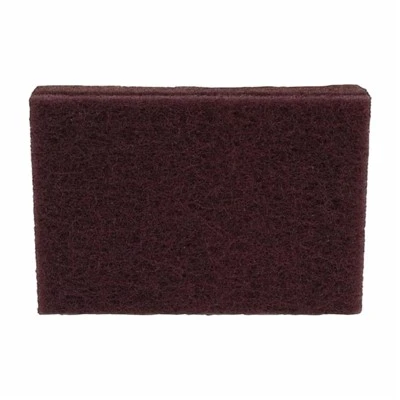
Then there’s the pad’s backing and flexibility. This is a big one that a lot of new users miss. If you use a stiff, rigid abrasive pad on vinyl, it’ll conform less, leaving uneven scratches and putting too much pressure in one spot. We use (and sell) non-woven abrasive pads for 90% of vinyl jobs—they’re made from nylon fibers bonded with abrasive grains, super flexible, and they don’t have that hard plastic back. They “give” with the vinyl’s shape, so you get an even, light cut without damaging the surface. For curved surfaces, like a vinyl pipe or a record, a foam-backed abrasive pad is perfect—extra soft, so you don’t apply too much pressure, and it gets into those tight curves without leaving lines.
Wait, let’s test a common scenario to make this real. Let’s say you’re refinishing a 20-year-old sheet vinyl floor that’s got faded spots and light scuffs from moving furniture. What should you do? First, grab a non-woven silicon carbide abrasive pad, 180 grit. Attach it to a random orbital sander (not a straight disk sander—straight ones put way too much downward force) and go over the floor with light, overlapping passes. Avoid going over the same spot too many times—each pass removes a tiny layer, so 2 or 3 quick passes are all you need. Then buff with a 320 grit pad to smooth it out, and you’re ready for a new coat of vinyl sealer. We’ve had a customer in Ohio do this last year, and his floor looked brand new for a fraction of the cost of replacing it. Compare that to his neighbor who used a coarse aluminum oxide pad and ended up with gouges everywhere—he had to replace half the floor.
Now, what about jobs where abrasive pads shouldn’t be used? Let’s get realistic. If you’re trying to remove deep gouges from vinyl—like a scratch that goes all the way through the top wear layer—abrasive pads aren’t the answer. Those scratches are too deep; sanding them out would require removing too much of the vinyl, which would thin out the wear layer and make it vulnerable to damage later. In that case, you’re better off using a vinyl repair kit. Also, never use abrasive pads on vinyl wallpaper—most vinyl wallpaper is too thin, and sanding would just tear it. Stick to gentle cleaning methods for that.
Another big myth: People think using a power sander is the only way, but a lot of vinyl jobs work great with a hand-held abrasive pad too. For small spots, like scuffs on a vinyl bumper or a small section of floor, a non-woven pad by hand is easy to control, and you don’t risk over-sanding. We sell a lot of these hand pads to homeowners for exactly that reason—they’re cheap, easy to use, and you don’t need fancy equipment.
Now, let’s talk about pro tips from our team (since we see this every day). First, always test your pad on a hidden spot first. Grab a piece of scrap vinyl (or a corner of your floor you can’t see) and test the pad, grit, and pressure. If it leaves shiny spots or scratches, you either need a higher grit or less pressure. Second, keep the pad clean. Abrasive pads get clogged with vinyl dust fast, especially non-woven ones. If you see the pad loading up (turning gray from dust), tap it against a trash can to knock off the debris, or rinse it with water if it’s washable. Clogged pads don’t work as well, and they can cause more scratch marks. Third, never go higher than 320 grit for final buffing—anything higher is just overkill, and it won’t make your vinyl look any better, it’ll just waste your pad.
Wait, I know some of you are thinking: What about industrial-grade vinyl, like that used in warehouses or on RVs? Yeah, that’s a different story. Industrial vinyl is thicker, has a tougher wear layer, so you can use a coarser grit pad, like 120, but still stick to silicon carbide or diamond. Just make sure you don’t use pads that are too aggressive—even on industrial vinyl, you don’t want to cut too deep.
Now, as an abrasive pads supplier, let me be clear: We’re not trying to sell you a fancy pad for a job that doesn’t need it. If you’re sanding vinyl for light scuffs and refinishing, our non-woven silicon carbide pads (180 and 220 grit) are perfect, and they’re way more affordable than the alternatives. If you’ve got heavy adhesive residue on vinyl tiles, our diamond-impregnated abrasive pads will cut through that way faster than a chemical adhesive remover, and they’re less likely to damage the vinyl underneath.
I’ve heard way too many horror stories from both pros and DIYers about ruining vinyl because they used the wrong abrasive pad. Last quarter, a contractor came to us after he used a coarse aluminum oxide pad on a vintage camper’s vinyl siding—he had to re-sand the whole thing with a 240 grit pad to fix his mistake, and he wasted 3 days of work. That’s the kind of thing we want to help you avoid, right?
So to circle back to the original question: Yes, abrasive pads can be used for sanding vinyl, but only if you pick the right pad, right grit, and use the right technique. No more guessing, no more wasting time or money.

If you’re not sure what you need, or if you’ve got a specific vinyl sanding job and aren’t sure which pad will work best, hit us up to chat through it. We’ve got years of experience working with vinyl, and we’ll hook you up with the right pad for your project, no fluff, no overpriced stuff you don’t need. We’re here to help you get the job done right.
Scrubbing Pads References:
- “Abrasive Materials for Surface Preparation,” International Organization for Standardization, 2021.
- “Vinyl Flooring Maintenance: Sanding and Refinishing,” Floor Covering Installation Contractors Association, 2022.
- “Non-Woven Abrasive Pads: Applications and Performance,” Abrasive Engineering Society, 2020.
Guangzhou YION New Material Technology Co., Ltd.
As one of the most professional abrasive pads manufacturers and suppliers in China, we offer a wide range of products with superior quality. Please feel free to buy customized abrasive pads made in China here from our factory. Also, quotation is available.
Address: Room 110, Building 2, No. 2 Jinhuan Street, Nansha District, Guangzhou City, Guangdong Province, China.
E-mail: info@yiontech.cn
WebSite: https://www.yionpads.com/
