Hey there, if you’re scrolling through this, you’re probably either a hoarder of basketball gear (raises hand, I’ve got enough socks to outfit a rec league twice over) or someone who’s been eyeing custom basketball socks and is like “wait, can I actually put my logo on these?” Spoiler: you absolutely can—but let’s be real, it’s not just shoving a sticker on a pair of cheap athletic socks from the dollar bin. I’ve been on the custom basketball socks grind for, uh… let’s just say long enough to have fixed more than my fair share of logo fails (shoutout to that local rec team that tried screen printing their brand on moisture-wicking socks and ended up with a half-peeled mess after one practice). Custom Basketball Socks

First off, let’s break down why this is such a common question. Most people start with the basics: basketball socks aren’t your regular tube socks. They’re built differently—thicker in the heel and toe for impact, moisture-wicking fabric so your feet don’t turn into a swamp mid-game, sometimes even reinforced arch support to keep you from cramping on a 4th quarter sprint. So adding a logo isn’t like printing on cotton tees or even custom jerseys; you’ve gotta work with the fabric’s properties, right?
Let’s get into the actual methods, because that’s where the real answers live. You’ve got a few main options, and each has its pros and cons—no one method is the “best” for every situation, which is why we spend time walking clients through this instead of just slapping on a logo and calling it a day.
First up, screen printing. This is the OG for a lot of custom athletic gear, and it’s super popular for basketball socks because it’s budget-friendly for bulk orders (like, if you’re outfitting a whole high school team, this is usually the go-to). How it works is you make a stencil for each color of your logo, then push ink through that stencil onto the sock fabric. Wait, but here’s the catch: not all inks play nice with basketball sock fabric. We usually use water-based or plastisol inks here—water-based is softer, doesn’t feel like a plastic patch on your foot, which is huge because if your logo is scratchy, your players are gonna hate it. Plastisol is more durable, though, stands up to more washes, so it works if your team’s playing in more intense leagues where gear takes a beating. The only downside to screen printing? If your logo has a ton of tiny details, or more than like 4-5 colors, it gets pricey fast—each color needs a new stencil, so that’s extra cost. Also, if you order too few pairs (like under 50 or so), screen printing might not be worth it because of the setup fees.
Then there’s heat transfer vinyl (HTV). This is a solid option for smaller orders, or if you want a super vibrant logo. HTV is like a pre-cut sheet of colored vinyl, you iron it (or press it, more accurately) onto the sock, and it sticks. The cool thing here is you can do super detailed designs—like gradients, tiny text, even photo elements if you want. But again, basketball socks’ fabric is thick and stretchy, so you gotta use the right kind of HTV. We use stretch HTV specifically made for athletic wear, because regular HTV cracks when you bend or stretch the sock. I’ve seen that happen too—someone ordered their rec league socks with regular HTV, and after the first jump shot, the logo split down the middle like a dried-up riverbed. Not cute, and a waste of money. HTV is also softer than you’d think now, if you get the good stuff, but it’s not as durable as screen printing for super heavy use—so if your team is practicing every day and washing socks after every session, screen printing lasts longer.
Wait, and don’t sleep on direct-to-garment (DTG) printing, even though it’s more common for t-shirts now. We’ve started offering DTG for custom basketball socks too, and it’s a game-changer for small orders with super intricate logos. DTG uses a printer that lays ink directly onto the fabric, no stencils, so you can have like 10 colors and tiny details without jacking up the cost too much. The only thing to note here is it’s not as durable for heavy use as screen printing—again, the ink can crack if the sock is stretched a lot over time—so we usually recommend DTG for things like custom pairs for individual players, or small batch merch for a local basketball brand.
Now, here’s the part that a lot of people don’t think about: fabric compatibility. Most custom basketball socks are made of a blend—usually polyester, spandex, maybe a little nylon. Why? Polyester is the best at wicking moisture away from your skin, spandex gives that stretch so the sock fits tight (no slipping down mid-game), nylon adds durability. The thing is, some printing methods work better on certain blends. For example, water-based screen printing ink adheres really well to polyester, but not as great on a sock with too much spandex—spandex is stretchy, so the ink might crack when you stretch the sock. That’s why we do a test print for every order, actually. We’ll print a tiny sample of your logo on the exact same fabric blend you want, let it sit for a day, stretch it, wash it a few times, and make sure it doesn’t peel or crack. I can’t tell you how many times a client has come to us after a bad experience elsewhere because the supplier didn’t do a test print, and they had to reorder—we try to avoid that mess upfront.
Another big question: where can you put the logo? Most people want it on the ankle or the calf area, right? That’s the most visible spot when you’re on the court. But you can also put it on the heel, the top of the foot, even the toe if you want (though that’s usually less popular because it rubs against the shoe). We usually tell clients to stick to the curved or flat areas of the sock, not the seams—seams are stretchy and have texture, so the ink or vinyl won’t lay as flat, and it’s more likely to peel. Pro tip: if you’re outfitting a team, coordinate with their jersey or mascot colors. We had a college team come to us last year that wanted their logo on the outer side of the calf, so when they lined up at the free throw line, every player’s logo was visible—super sharp, and the team loved it.
Wait, what about custom logos for personal use? Like, if you’re a player who wants your number or a personal brand on your own basketball socks? Yeah, that works too. We do small batch orders, even as low as 10 pairs, for individuals or small groups. I once had a guy who ordered 5 pairs with his last name and a tiny basketball graphic, because he hated generic socks at pickup games. That’s totally doable. The only thing to consider is that for small orders, DTG is usually cheaper than screen printing, since screen printing has setup fees that aren’t worth it for 10 pairs.
Now, let’s talk about common mistakes people make when adding a logo to custom basketball socks. Number one: picking the wrong printing method for their use case. Like, a high school team that plays 2-3 games a week and practices 4 days a week—don’t get HTV, get screen printing, because it’s gonna last longer. Number two: using too much ink. If the logo is raised super thick, that’s not only scratchy, but it’s also more likely to peel when the sock is stretched. We keep the ink layer thin, which is softer and more durable. Number three: not considering the sock’s stretch. Basketball socks are meant to stretch, so the logo has to stretch with them. That’s why we use stretch-specific materials for HTV, and flexible inks for screen printing—if the logo can’t stretch, it’s gonna break.
Oh, and here’s a fun side note: some people ask about embroidered logos too. Wait, can you put an embroidered logo on custom basketball socks? Yeah, that’s another option, but it’s way more expensive. Embroidery is super durable, no doubt, but it adds a thick patch on the sock, which can be scratchy and uncomfortable when you’re wearing it for hours on the court. Unless it’s for like a formal event or a special team that wants a premium look, we usually steer people away from embroidery for game-day socks—you don’t want a scratchy logo distracting you during a layup. We’ve embroidered for a few pro basketball teams’ warmup socks, but that’s a whole other level of custom work, and way pricier than print methods.
So, to circle back to the original question: Can you put your logo on custom basketball socks? 100% yes. But it’s not a one-size-fits-all thing, and the best logo for you depends on how many pairs you need, how often they’ll be used, your budget, and what the logo itself looks like. We’ve messed up a few times early on—like that time we tried to print a logo with a neon pink color on a black sock, and the neon didn’t pop like the client wanted, so we reprinted for free. That’s the kind of stuff we do right here, walk you through every step, show you samples before you commit, so you don’t end up with a sock you hate.
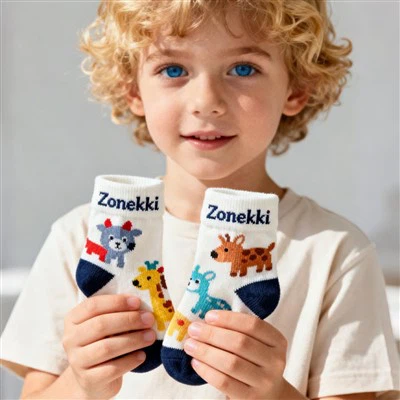
If you’re thinking about ordering custom basketball socks with your logo, whether it’s for a team, a brand, or just yourself, hit us up. We’ll walk you through the printing methods, help you pick the right fabric, do test prints so you know exactly what you’re getting, and make sure your logo looks good and lasts through every practice, game, and wash. No weird fine print, no hidden fees, just solid advice and quality socks.
Custom Socks References:
- Performance Athletic Sock Fabric & Printing: A Guide for Custom Apparel Design, Specialty Sports Apparel Association, 2022.
- Durability Testing of Printing Methods for Stretch Athletic Fabrics, Journal of Textile and Apparel, Technology and Management, Vol. 12, No. 3, 2021.
- Custom Athletic Apparel Best Practices: Logo Placement and Material Compatibility, Small Business Apparel Network, 2023.
Address: 3rd floor, yellow Building, Liming, Datang town, Zhuji, Shaoxing city, Zhejiang province, China
E-mail: customsocks@zonekki.com
WebSite: https://www.zonekki-socks.com/
