If you’ve ever stood in a manufacturing shop floor or worked on a custom engineering project, you know that a standard bolt from the hardware store almost never cuts it. Whether you’re building a wind turbine tower that has to withstand harsh coastal winds, assembling aerospace components that demand zero margin for error, or putting together medical devices that go inside the human body, special fasteners are non-negotiable. As someone who’s been a special fastener supplier for over 12 years, I’ve fielded the same question a hundred times from engineers, project managers, and procurement teams: “Why does this fastener cost three times more than that identical-looking one?” The answer isn’t just a random markup—it’s a breakdown of materials, manufacturing processes, testing, and custom engineering that sets each type apart. Today, I want to walk you through the real cost differences between the most common special fastener types, what drives those price tags, and why investing in the right one saves you money (and headaches) in the long run. Special Fasteners
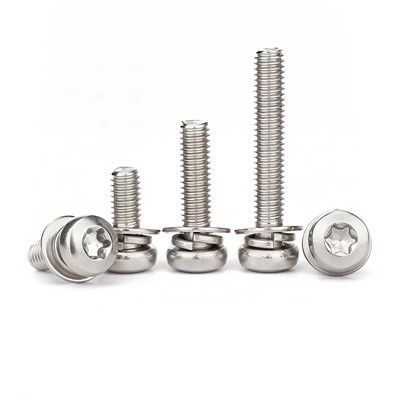
Let’s start by defining what a “special fastener” actually is, because that term can mean everything to everyone. For our purposes, a special fastener is any fastener that isn’t a standard off-the-shelf part from ANSI or ISO standard charts. It’s built to solve a specific problem: resistance to extreme temperatures, compatibility with corrosive chemicals, a unique size that fits a non-standard hole, or a design that prevents loosening in high-vibration environments. I’ve worked on projects that required a custom titanium bolt for a satellite (where every gram counts) and another that needed a specialty coated nut for a food processing line (where bacteria can’t hide in crevices) — and the cost differences between those two could fill a separate blog post. But let’s focus on the four most popular categories of special fasteners: alloy steel specialty fasteners, corrosion-resistant alloy fasteners (like stainless steel and Inconel), titanium and high-performance metal fasteners, and engineered plastic specialty fasteners. We’ll break down each, their cost drivers, and real-world use cases that show why their prices vary so much.
First up: alloy steel specialty fasteners. These are the workhorses of industrial special fasteners, and they’re also the most affordable of the bunch. Most people don’t realize that “alloy steel” is not a single material—it’s carbon steel mixed with small amounts of other elements (like chromium, manganese, or molybdenum) to boost strength, hardness, and toughness. The special twist here is that these fasteners aren’t just your standard 1/2-inch bolt off the shelf. They’re custom-sized, often heat-treated to achieve a specific tensile strength (usually between 120,000 and 220,000 psi, which is way higher than a standard bolt’s 60,000 to 80,000 psi), and sometimes have a basic coating (like zinc plating) for mild corrosion resistance. The cost drivers here are relatively straightforward: custom machining and heat treatment. A standard alloy steel bolt costs about $0.10 to $0.50 apiece, but a special alloy steel fastener — say, a custom-shaped bolt with a non-standard head size and a precise tensile strength rating — can run from $0.75 to $5 apiece, depending on volume. The big caveat with alloy steel is that it’s not for harsh environments. Leave it outside in salt air, and it’ll rust within months. That’s why it’s the go-to for general industrial applications where strength is key but corrosion is mild: heavy machinery frames, construction equipment, and agricultural equipment. Last year, I supplied a batch of 10,000 custom alloy steel bolts for a construction company building a bridge support in the Midwest; they needed a bolt that could handle heavy loads and fit a non-standard hole in the steel girder. We quoted $1.20 per bolt, and they told me that a standard bolt would have failed the load test within a year, costing them millions in repairs. That’s the ROI of alloy steel special fasteners right there.
Next, corrosion-resistant alloy fasteners. This is where prices start to jump, and for good reason. Corrosion-resistant fasteners are built for environments where rust or chemical degradation would destroy standard materials, and they come in two main varieties: stainless steel and high-performance alloys like Inconel or Hastelloy. Let’s start with stainless steel, which is the most common of these. Standard stainless steel (like 304 or 316) has a chromium content that forms a protective oxide layer, making it resistant to corrosion. But a special stainless steel fastener isn’t just any stainless bolt—it’s often custom-machined to avoid crevices (which can trap moisture and cause corrosion), polished smooth for food or medical applications, or heat-treated for extra strength. A standard 316 stainless bolt costs about $0.30 to $1 apiece, but a special custom stainless steel fastener can run from $2 to $15 apiece. Now, when we get to high-performance alloys like Inconel, which is a nickel-chromium superalloy, the price skyrockets. Inconel is designed to withstand extreme temperatures (up to 2,000 degrees Fahrenheit) and corrosive chemicals that would eat through stainless steel like butter. It’s the go-to for aerospace engines, chemical processing plants, and oil and gas drilling equipment. A custom Inconel fastener can cost anywhere from $10 to $50 apiece, and that’s before testing. The big cost drivers here are material cost and precision manufacturing. Inconel is a rare material, so its raw price is 5 to 10 times higher than stainless steel. Plus, machining Inconel is a nightmare for manufacturers—it’s tough on tools, generates a lot of heat, and requires slow, precise cuts to avoid warping. Last year, we supplied Inconel fasteners for a petrochemical plant’s reactor vessel; the plant was dealing with corrosive acid fumes that had destroyed their stainless steel fasteners in 6 months. The Inconel ones we supplied have been in place for over two years, with zero signs of corrosion. The plant’s maintenance team told me that even though the fasteners cost more upfront, they saved 80% on replacement and downtime costs. That’s a lesson I’ve learned again and again: for corrosive environments, the more expensive corrosion-resistant fasteners pay for themselves quickly.
Now, titanium and high-performance metal fasteners. These are the lightweight giants of the special fastener world, and they’re priced accordingly. Titanium is 40% lighter than steel, has excellent corrosion resistance (even better than stainless steel in many cases), and is incredibly strong for its weight. That makes it perfect for aerospace, medical devices, and high-performance racing equipment, where every pound of weight saved translates to better fuel efficiency or performance. A standard titanium bolt costs about $1 to $3 apiece, but a special custom titanium fastener—say, a bolt with a unique thread form for a satellite panel or a biocompatible coating for an orthopedic implant—can run from $5 to $100 apiece, depending on the complexity. The cost drivers here are twofold: material cost and certification. Titanium is even rarer than Inconel, and its raw price is 10 to 20 times higher than alloy steel. But for medical or aerospace applications, it’s not enough to just use titanium—you need to be able to prove it’s pure titanium, with no defects that could cause failure. That means rigorous testing: chemical analysis of every batch, tensile strength testing, and for medical parts, biocompatibility testing that meets FDA standards. Last year, we supplied custom titanium fasteners for a company making spinal implants; each fastener had to meet strict FDA biocompatibility requirements, and we had to provide full documentation for every single part. The customer told me that even though the fasteners were 10 times more expensive than stainless steel, they were the only ones that could be used inside the human body without causing an adverse reaction. And in aerospace, weight savings are critical: a 787 dreamliner uses over 3 million titanium fasteners, and switching from steel to titanium saves over 1,500 pounds of weight, which translates to millions of dollars in fuel savings over the plane’s lifetime. That’s why titanium fasteners are worth the premium for high-stakes, high-performance applications.
The fourth category is engineered plastic specialty fasteners, which are often the most underrated (and surprisingly expensive) special fasteners. When you think of fasteners, plastic probably doesn’t come to mind, but there are plenty of applications where metal is a bad idea: it conducts electricity, can corrode, or is too heavy. Engineered plastic fasteners are made from high-performance plastics like PEEK, nylon, or HDPE, and they’re designed to solve specific problems: insulation, chemical resistance, or no metal contamination. A standard nylon bolt costs about $0.05 to $0.20 apiece, but a special PEEK fastener—used in medical devices or semiconductor manufacturing, where metal particles would ruin products—can run from $3 to $50 apiece. The cost drivers here are material performance and precision molding. PEEK is a high-temperature plastic that can withstand up to 500 degrees Fahrenheit, is extremely strong, and is completely inert, meaning it won’t react with chemicals or body tissues. Machining or molding PEEK is different from molding regular plastic—it requires specialized tools and processes to avoid warping or defects. For semiconductor applications, even a tiny metal particle from a metal fastener can destroy a $10,000 silicon wafer, so PEEK fasteners are non-negotiable. Last year, we supplied PEEK fasteners to a semiconductor manufacturing plant that had been having issues with metal contamination ruining their wafers; switching to our custom PEEK fasteners reduced their defect rate by 95%, saving them over $2 million in lost production. That’s the kind of impact that engineered plastic fasteners can have, even though their upfront cost is higher than standard metal fasteners.
Now, I want to address a common misconception: the cheapest fastener isn’t always the best, and the most expensive isn’t always the right one. As a special fastener supplier, I see procurement teams get caught up in upfront cost, only to face costly downtime, repairs, or even safety failures later on. Let’s break down the total cost of ownership (TCO) for each type, because that’s what really matters. For example, a $0.10 alloy steel fastener might seem cheap, but if it fails every 6 months in a corrosive environment, the TCO over 5 years is $1 per fastener (plus downtime and repair costs). A $2 stainless steel fastener that lasts 10 years has a TCO of $0.20 per fastener, which is way lower. That’s the math that most people miss when they’re choosing fasteners.
Another factor that affects cost is volume. This is a big one for special fasteners, because custom parts are often made in small batches. If you need 100 custom fasteners, the cost per piece will be much higher than if you need 100,000, because manufacturers have to set up their tools and processes for a small order. But even for large orders, the cost differences between the types remain. For example, the per-piece cost of Inconel fasteners for a 100,000-piece order might drop from $50 to $30, but it’s still way higher than alloy steel’s $0.50 per piece for the same volume. That makes sense when you think about the material and manufacturing requirements.
Testing and certification are also huge cost drivers, especially for industries like aerospace, medical, and nuclear. A standard off-the-shelf fastener doesn’t require much testing, but a special fastener for a medical implant has to go through months of biocompatibility testing, fatigue testing, and documentation to prove it meets regulatory standards. That testing can add 20 to 50% to the total cost of the fastener, but it’s non-negotiable for these industries. I’ve had customers who tried to skip testing to save money, only to have their parts rejected by the FDA, costing them hundreds of thousands of dollars in rework and delays.
So, what should you do when you’re choosing a special fastener? First, don’t just look at the upfront cost. Ask yourself: what environment will this fastener be in? What loads does it need to handle? Are there regulatory requirements? What’s the total cost of ownership, including replacement, downtime, and testing? As a special fastener supplier, I work with every customer to assess their specific needs, not just sell them the most expensive part. For example, if a customer needs fasteners for a mild industrial application, I’ll recommend alloy steel special fasteners, which are affordable and reliable. If they need something for a coastal bridge or chemical plant, I’ll point them to stainless steel or Inconel. If it’s an aerospace or medical application, titanium is the way to go. And if they need fasteners for a semiconductor or food processing line, engineered plastic is the best fit.
I’ve been in this industry long enough to know that special fasteners aren’t just small parts—they’re critical components that keep projects running, products safe, and industries moving. The cost differences between them aren’t arbitrary; they reflect the material, engineering, testing, and precision that goes into each one. When you choose the right special fastener for your application, you’re not just buying a part—you’re investing in reliability, safety, and long-term savings.
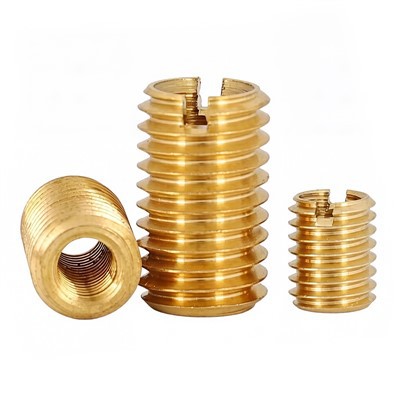
If you’re working on a project and aren’t sure which special fastener is right for you, or if you’ve been dealing with fastener failures, I’d love to talk through your needs. Let’s walk through your project requirements, environment, and budget, and find the perfect special fastener solution that balances performance and cost. Don’t settle for off-the-shelf parts that don’t fit your needs—let’s work together to get the right fasteners for your project.
Bolts and Screws References
ASM International. (2020). Fast Materials Handbook: Volume 4, Engineering Alloys. ASM International.
European Industrial Fasteners Association. (2021). Special Fasteners: Design, Manufacturing, and Application Standards. EFIA.
NASA. (2019). Materials Selection Handbook for Aerospace Fasteners. National Aeronautics and Space Administration.
Plastics Industry Association. (2022). Engineered Plastics for Specialty Fastener Applications. PIA.
Shanghai Megood Metal Products Co., Ltd.
As one of the most experienced special fasteners manufacturers and suppliers in China, we have world-leading production equipment and strong manufacturing capabilities. Please rest assured to wholesale bulk special fasteners made in China here and get quotation from our factory. Customized orders are welcome.
Address: Building 8, No. 1500 Huiren Road, Waigang Town, Jiading District, Shanghai
E-mail: liujingshco@163.com
WebSite: https://www.mgx-hardware.com/
